
Kansas City misdiagnosis cases are a specific category of medical malpractice claims where a patient suffers harm because a doctor or healthcare provider identified the wrong condition, missed a diagnosis entirely, or delayed reaching the correct one. Proving this type of claim requires more than showing a doctor made a mistake – it demands clear evidence that their conduct fell below an accepted medical standard and directly caused your injury.
This guide focuses specifically on what injury victims in the Kansas City, Missouri area must establish to succeed in a medical malpractice misdiagnosis claim.
Misdiagnosis Definition: A misdiagnosis occurs when a medical professional fails to correctly identify a patient’s condition, resulting in wrong treatment, delayed treatment, or no treatment – and causes measurable harm as a result.
Not every wrong diagnosis becomes a legal case. Doctors make judgment calls constantly, and medicine is not an exact science. But when a provider’s failure falls outside what a reasonably competent doctor would have done, and a patient is hurt because of it, the law in Missouri gives that patient the right to seek compensation. At PK Law Group, we handle personal injury matters for people throughout the Kansas City metro, and misdiagnosis cases are among the most frustrating situations our clients face – because the harm is often preventable.
The Four Core Elements You Must Prove
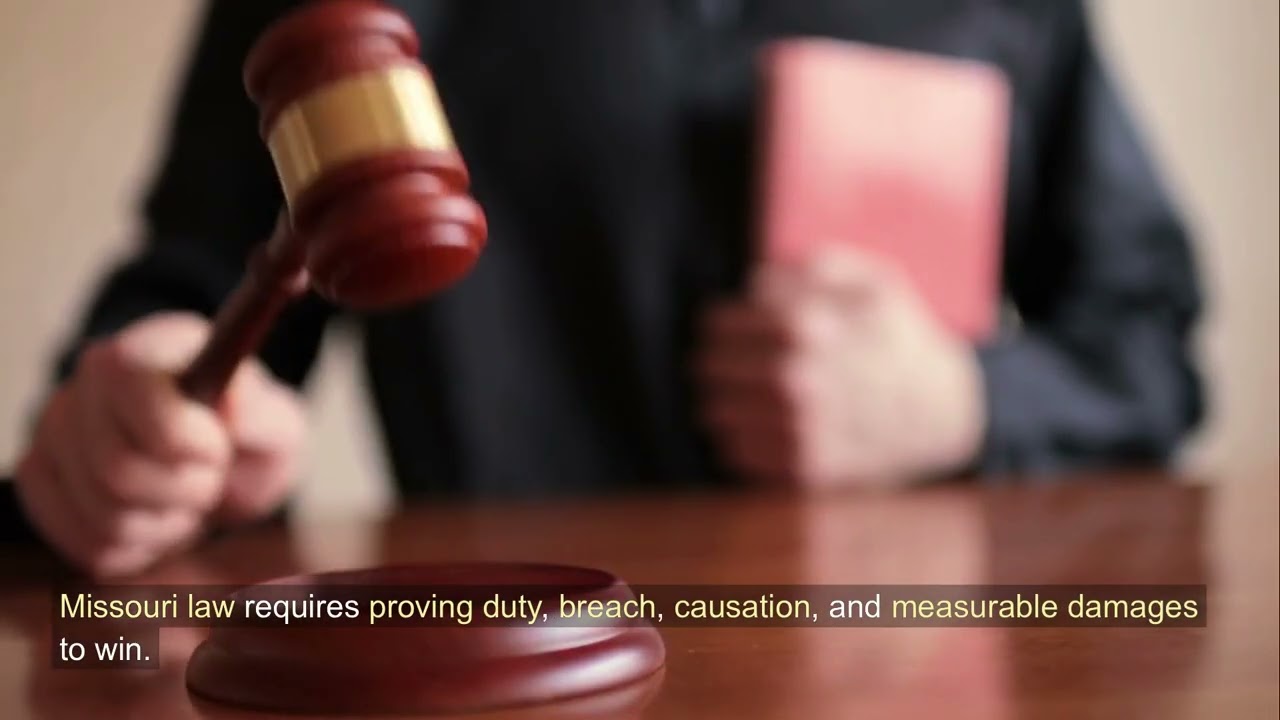
Missouri law requires that a misdiagnosis claim satisfy four distinct legal elements. Missing even one of them can sink an otherwise strong case.
- Duty of Care: A doctor-patient relationship existed, creating a legal obligation for the provider to treat you with reasonable competence.
- Breach of Standard of Care: The provider’s actions – or failures to act – deviated from what a competent physician with similar training would have done under the same circumstances.
- Causation: The misdiagnosis directly caused your injury or worsened your condition. This is often the hardest element to prove.
- Damages: You suffered actual, measurable harm – physical, financial, or emotional – as a result of the misdiagnosis.
According to research published in medical journals, diagnostic errors affect an estimated 12 million Americans each year in outpatient settings alone. Recent data from patient safety organizations shows that serious misdiagnosis-related harm occurs in roughly 1 in 20 adults seeking medical care. Those numbers reflect real people in Kansas City, Independence, Overland Park, Lenexa, and surrounding communities who never got the answers they deserved.
What ‘Standard of Care’ Actually Means in a Misdiagnosis Case
Standard of care: The level of diagnosis, treatment, and follow-up that a reasonably skilled physician in the same specialty would provide under similar circumstances.
This standard is local and specialty-specific. A family medicine doctor is not held to the same diagnostic standard as an oncologist. A rural clinic operates under different resource constraints than a major Kansas City hospital. Courts in Missouri evaluate breach of standard of care by asking: what would a competent doctor in that role, in that setting, have done differently?
The most common mistake we see in potential misdiagnosis claims is patients assuming that a bad outcome automatically means someone did something wrong. That’s not how Missouri law works. You need a qualified medical professional – typically an professional witness – to testify that the treating physician’s conduct fell below accepted standards.
Thinking about whether your situation might qualify? Contact us for a straightforward conversation about what you experienced. No pressure, no commitment – just honest answers.
Proving Causation: The Hardest Part of These Cases
Causation is where many misdiagnosis cases get complicated. You must show not just that the doctor made an error, but that the error caused harm that would not have occurred with a correct diagnosis. This is sometimes called the “loss of chance” theory in Missouri.
Here’s what that looks like in practice: if a patient had a 70% survival rate with timely cancer diagnosis, and a delayed diagnosis dropped that to 30%, Missouri courts have recognized that the patient lost a substantial chance at a better outcome. That lost chance can be compensable, even if the patient still received some treatment.
Differential diagnosis failure: A situation where a physician fails to systematically work through possible diagnoses and rule out serious conditions, increasing the risk of a missed or wrong conclusion.
Misdiagnosis vs. Delayed Diagnosis: Which Approach Works?
How These Two Claims Compare
| Claim Type | What Happened | Key Challenge | Best For |
|---|---|---|---|
| Misdiagnosis | Wrong condition identified, wrong treatment given | Proving the error caused harm, not the underlying illness | Cases where wrong treatment caused direct injury |
| Delayed Diagnosis | Correct diagnosis reached too late | Proving earlier diagnosis would have changed the outcome | Cancer, stroke, heart attack cases with time-sensitive treatment windows |
Where misdiagnosis claims succeed: When a patient received active treatment for the wrong condition and suffered side effects, surgical complications, or worsened health as a result.
Where misdiagnosis claims face challenges: When the underlying condition would have caused the same harm regardless of when it was caught.
Where delayed diagnosis claims succeed: When the condition was highly treatable early and the delay directly reduced the chance of recovery.
Where delayed diagnosis claims face challenges: When prognosis was poor regardless of timing, making causation difficult to establish.
The verdict: Both theories can succeed in Missouri courts, but they require different professional evidence and different causation arguments. The right approach depends on your specific medical facts.
Missouri’s Statute of Limitations for Misdiagnosis Claims
Under current Missouri law (2026), medical malpractice claims generally must be filed within two years of when the patient discovered – or reasonably should have discovered – the injury. There is also a statute of repose that can bar claims after a longer period regardless of discovery. Missing this deadline almost always means losing your right to pursue compensation entirely.
This urgency is real. Medical records get harder to retrieve. Professional witnesses become less available. Memories fade. If you suspect a misdiagnosis harmed you or someone in your family, the worst thing you can do is wait to find out whether a claim exists.
See how our approach to personal injury cases can apply to your situation – visit our Personal Injury Attorney page or explore options for those in the Olathe, KS area and Blue Springs, MO.
Your Misdiagnosis Case Action Plan
- Step 1 – Gather Your Medical Records: Request complete records from every provider involved. These documents form the foundation of your entire claim.
- Step 2 – Document Your Timeline: Write down when symptoms started, what you were told at each appointment, and when you first suspected something was wrong.
- Step 3 – Seek a Second Medical Opinion: An independent evaluation can establish what the correct diagnosis should have been and when.
- Step 4 – Consult an Attorney Promptly: Missouri’s filing deadlines begin running whether you’re ready or not. Earlier consultation gives your attorney more time to build a case.
- Step 5 – Preserve All Evidence: Keep prescription bottles, test results, bills, and any written communications from your provider.
Key Takeaways for Kansas City Residents in 2026
- Four elements are required – duty, breach, causation, and damages must all be established for a successful claim.
- Standard of care is specialty-specific – what counts as a breach depends on the type of doctor and clinical setting involved.
- Causation is the hardest hurdle – you must show the error, not just the illness, caused or worsened your harm.
- Missouri’s two-year deadline is firm – waiting too long ends your legal options, full stop.
- Professional testimony is almost always required – these cases are built on medical evidence, not just your account of what happened.
Frequently Asked Questions
How do I know if my doctor’s misdiagnosis qualifies as medical malpractice?
A misdiagnosis qualifies as malpractice when a competent physician in the same role would have reached the correct diagnosis, and the error caused measurable harm to the patient. Not every diagnostic mistake rises to that level. You need evidence of a breach of standard of care, which typically requires a medical professional’s review.
How much does a medical malpractice case typically cost to pursue?
Medical malpractice cases generally require significant investment in professional witnesses and records review, but many personal injury attorneys handle these cases on a contingency fee basis. That means no upfront payment – the firm only gets paid if compensation is recovered on your behalf. PK Law Group operates on this contingency model.
How long does a misdiagnosis case take in Missouri?
Most medical malpractice cases in Missouri take between one and three years to resolve, depending on complexity and whether the case settles or goes to trial. Cases involving disputed causation or multiple providers tend to take longer due to the volume of professional testimony required.
What types of misdiagnosis cases are most common?
Cancer misdiagnosis, missed heart attack or stroke diagnosis, and failure to identify infections are among the most frequently litigated misdiagnosis cases. These conditions share a common thread – early diagnosis significantly changes treatment options and outcomes, making delayed or wrong diagnoses especially harmful.
Can I still file a claim if the misdiagnosis happened more than a year ago?
Missouri allows two years from the date of discovery of the injury, so a claim may still be viable even if the misdiagnosis happened more than a year ago. The key is when you reasonably should have known the misdiagnosis caused harm, not necessarily when the error occurred.
Do I need to file a complaint with the state medical board before suing?
Filing a complaint with the Missouri State Board of Registration for the Healing Arts is not legally required before pursuing a malpractice lawsuit. However, doing so can create an official record and may support your legal case independently.
What This Means for You
Misdiagnosis cases are genuinely difficult to win – but that does not mean they are impossible. The right medical evidence, a clear timeline, and a legal team that understands how Missouri courts evaluate these claims can make the difference between a dismissed case and real accountability.
PK Law Group serves clients throughout Kansas City, Missouri and the surrounding metro, including communities in Johnson County, Jackson County, Clay County, and across the state line into Kansas. Our firm is built around a personal approach – real communication, honest assessments, and representation that fits your situation, not a one-size-fits-all process.
Ready to find out if your case has merit? Contact us today for a free consultation. We’ll review what happened, explain your options, and give you a straight answer – no obligation required. Reach us at (816) 929-8777 or visit our office at 2015 Grand Blvd., Kansas City, MO 64108.